
silicone adjuvant
How does a silicone adjuvant help in reducing pesticide runoff? - silicone adjuvant factory and suppliers
silicone adjuvant factory and suppliers
silicone adjuvant
Information Center
Everything you need to know about our products and company
How does a silicone adjuvant help in reducing pesticide runoff?
How Silicone Adjuvants Effectively Reduce Pesticide Runoff
In modern agriculture, silicone adjuvants have emerged as a transformative technology for addressing one of farming’s most persistent challenges: pesticide runoff. This critical issue not only represents wasted resources but also contributes to environmental contamination. Silicone-based adjuvants provide an effective solution by fundamentally improving how pesticides interact with plant surfaces, thereby significantly reducing the amount of chemicals that wash into ecosystems.
The Pesticide Runoff Problem and Its Consequences
Traditional pesticide application faces a fundamental efficiency problem: without advanced adjuvant technology, only approximately 20-30% of sprayed chemicals actually remain on target plants. The remaining 70-80% is lost to the environment through various pathways, including evaporation, drift, and particularly runoff into soil and groundwater .
This runoff carries significant consequences beyond product waste. Pesticides that miss their intended targets can contaminate water sources, accumulate in soils, and harm beneficial insects and wildlife. The financial implications are equally concerning, as farmers essentially pay for pesticides that never serve their intended purpose. This inefficiency creates a costly cycle where environmental damage and operational expenses increase simultaneously.
How Silicone Adjuvants Minimize Runoff
1. Super-Spreading Action for Maximum Coverage
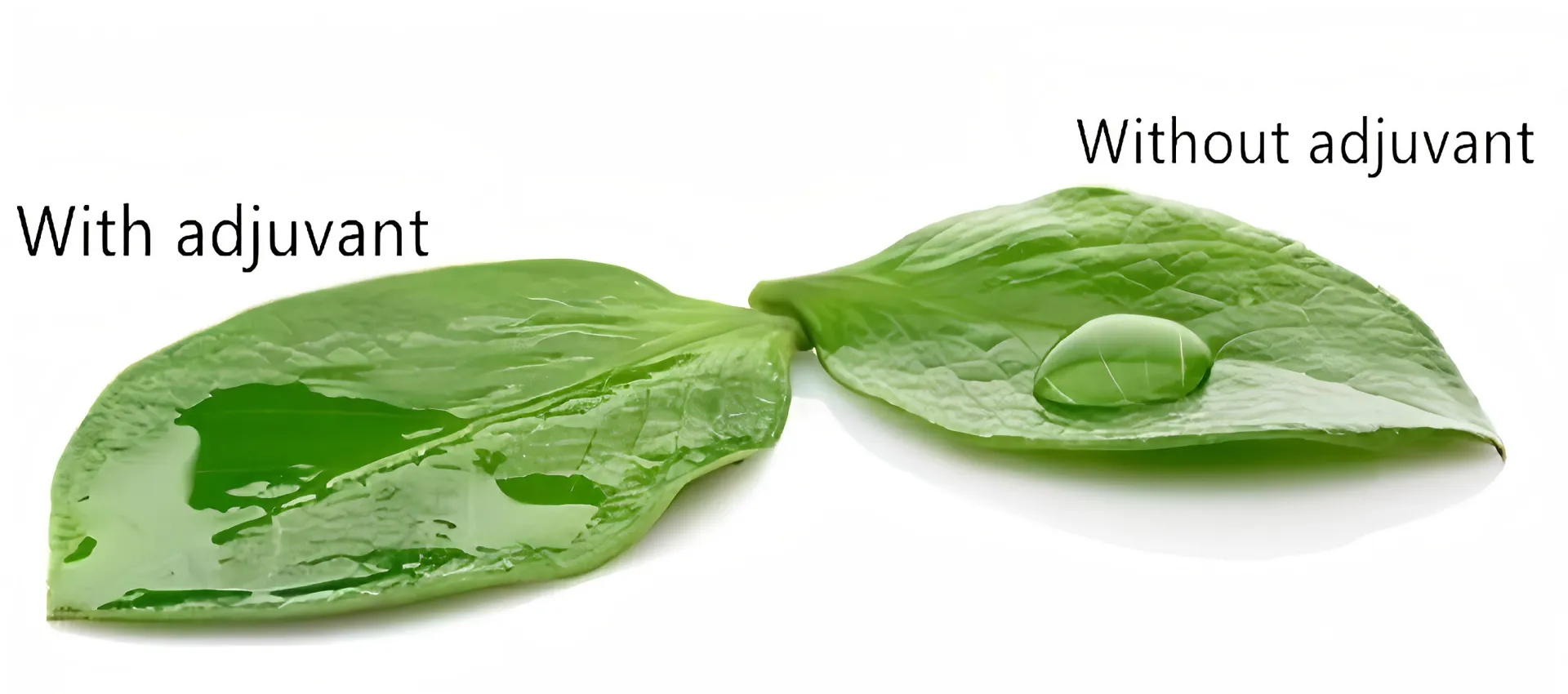
Silicone adjuvants contain polyether-modified trisiloxane molecules that create a unique “T-shaped umbrella” structure capable of reducing the surface tension of spray solutions to remarkably low levels (approximately 21.0-21.5 mN/m compared to water’s 72.4 mN/m) . This extreme tension reduction enables sprayed droplets to immediately flatten and spread across even the most challenging hydrophobic plant surfaces, such as waxy or hairy leaves.
The spreading capability of silicone adjuvants is unprecedented. Research demonstrates that a 0.1% concentration of Silwet L-77 creates a spreading area of 172 mm², compared to just 4 mm² for conventional adjuvants . This 43-fold increase in coverage means each droplet achieves substantially more uniform distribution, ensuring pesticides contact more of the target surface rather than accumulating in droplets that easily run off.
2. Enhanced Retention and Adhesion
The super-spreading characteristic is complemented by dramatically improved retention. With conventional applications, spray droplets often bead up on plant surfaces, creating scenarios where even slight precipitation or irrigation can dislodge them. Silicone adjuvants eliminate this beading effect by creating a thin, uniform film that clings tenaciously to the leaf surface. This adhesive property maintains pesticide placement even under challenging conditions.
3. Rapid Absorption and Rainfastness
Perhaps the most significant advantage of silicone adjuvants in runoff prevention is their ability to promote rapid uptake by plant tissues. When spray solutions containing silicone adjuvants contact leaf surfaces, they facilitate penetration through natural openings like stomata via a phenomenon known as stomatal infiltration .
This rapid absorption creates what agricultural scientists call “rainfastness” – the ability to resist being washed away by rainfall. Experimental data confirms that pesticides containing silicone adjuvants retain over 85% of their effectiveness after rainfall, compared to just 40% for traditional formulations . For farmers, this means fewer reapplications are needed after rain events, creating both economic and environmental benefits.
Biyuan’s silicone adjuvant technology specializes in enhancing this rainfastness property, with formulations specifically engineered to promote uptake within minutes rather than hours.
Quantifiable Benefits: Beyond Runoff Reduction
The implementation of silicone adjuvant technology generates measurable improvements across multiple agricultural metrics:
Water Conservation
Silicone adjuvants enable substantial reductions in water usage during application. Field tests demonstrate that incorporating these adjuvants can lower water consumption by 50-70% while maintaining or improving coverage . In practical terms, this translates to reducing water requirements from approximately 45 kg per mu to just 15 kg in crops like rice .
Pesticide Efficiency
The enhanced coverage and absorption directly improve pesticide performance. Studies document 30-50% improvements in efficacy, allowing farmers to achieve equivalent or superior pest control while using less active ingredient . This efficiency gain is particularly valuable with expensive specialized pesticides, where maximizing each unit’s effectiveness delivers significant economic benefits.
Economic Impact
The combined effect of reduced pesticide requirements, lower water usage, and decreased labor for reapplications creates compelling economics. For example, weed control in wheat fields demonstrates cost reductions from approximately 25 yuan per mu to just 15 yuan while maintaining effectiveness . This 40% cost reduction makes advanced adjuvant technology one of the most cost-effective investments available to modern farming operations.
Biyuan’s adjuvants are specifically formulated to maximize these economic benefits through concentrated formulations that provide superior performance at lower use rates.
Application Versatility Across Agricultural Scenarios
Silicone adjuvants deliver value across diverse agricultural contexts:
Row Crop Applications
In large-scale field crops like corn, soybeans, and wheat, silicone adjuvants enhance the performance of herbicides, insecticides, and fungicides. The technology is particularly valuable for post-emergence applications where thorough coverage is critical to success.
Specialty Crop Uses
For high-value fruits, vegetables, and nuts, silicone adjuvants help achieve the uniform coverage necessary for effective pest and disease management while minimizing residues that affect marketability. Research with citrus crops shows that gibberellin solutions containing silicone adjuvants can extend the harvest period by 15 days while improving fruit quality and reducing residue concerns .
Precision Agriculture Integration
The movement toward reduced volume applications, including drone-based spraying, benefits significantly from silicone adjuvant technology. These adjuvants maintain effectiveness even at ultra-low volumes (as low as 1-2 liters per hectare in some drone applications), making them ideal for precision agriculture approaches .
Biyuan’s Advanced Silicone Adjuvant Solutions
As a recognized silicone adjuvant factory with ISO-certified manufacturing processes, Biyuan has developed a comprehensive range of adjuvant technologies to address specific agricultural challenges. Our product portfolio includes options tailored to different water conditions, pesticide chemistries, and application methods.
Biyuan’s specialty includes developing adjuvants with extended pH stability (functioning effectively in pH 6-9 environments) and enhanced compatibility with various pesticide formulations including EC, SC, WP, and WG types . This compatibility ensures consistent performance across diverse agricultural chemical systems.
For operations looking to enhance their sustainability profile, Biyuan offers OMRI, IBD, KIWA, and Ecocert certified options suitable for organic production systems . These certifications provide independent verification of the environmental attributes that matter to today’s conscious consumers.
Implementation Best Practices
To maximize the runoff reduction benefits of silicone adjuvants, proper application is essential. Key considerations include:
- Timing Applications: Apply when conditions favor rapid uptake (moderate temperatures, high humidity)
- Water Quality: Consider water hardness and pH when preparing spray solutions
- Equipment Calibration: Ensure spraying equipment is properly calibrated for even distribution
- Appropriate Loading Rates: Use recommended concentrations (typically 0.015% to 0.1% of total spray volume)
Biyuan provides comprehensive technical support to help customers optimize these variables for their specific operating conditions, ensuring maximum return on investment from adjuvant technology.
The Future of Silicone Adjuvants in Sustainable Agriculture
As agricultural sustainability requirements intensify globally, silicone adjuvant technology continues to evolve. Next-generation formulations are addressing emerging needs such as compatibility with biological pesticides, optimization for autonomous application equipment, and enhanced performance under water-stressed conditions.
The integration of silicone adjuvant technology represents a practical pathway toward reconciling productivity demands with environmental responsibility. By fundamentally improving the efficiency of pesticide applications, these advanced materials deliver simultaneous benefits for farmers’ profitability and ecosystem health.
For agricultural operations seeking to minimize their environmental footprint while maintaining effective pest control, Biyuan’s silicone adjuvants offer a proven solution that addresses the root causes of pesticide runoff rather than just the symptoms. This technology transforms pesticide application from a necessary challenge into an optimized component of sustainable farming systems.
Factory Products
Our most popular products loved by customers worldwide
SILICONE ADJUVANT FOR AGRICULTURE
In the era of precision agriculture, SILICONE ADJUVANT has redefined crop protection standards through its advanced surfactant technology. By leveraging organosilicon compounds, this innovative solution tackles fundamental challenges in pesticide application with unparalleled efficacy. The agent’s core strength lies in its ability to transform liq.
SILICONE ADJUVANT FOR DEFOAMER
SILICONE DEFOAMER: REDEFINING INDUSTRIAL FOAM CONTROL In the demanding environments of chemical processing, food production, and bio-fermentation, foam presents a persistent challenge to operational efficiency and product quality. SILICONE DEFOAMER emerges as a critical solution, engineered with advanced organosilicone technology to deliver unparalleled.
SILICONE ADJUVANT FOR COATINGS AND INKS
Within the coatings and inks industry, achieving flawless surface aesthetics and superior functionality presents persistent challenges in formulation design and application. Silicone additives address these challenges through advanced molecular technology designed to precisely modulate surface tension and interfacial properties. Their core functionality st.
SILICONE ADJUVANT FOR PLASTIC AND RUBBER PROCESSING
Silicone adjuvants are transforming plastic and rubber manufacturing through their exceptional interface modification capabilities. These specialized additives enable significant processing improvements, including up to 40% reduction in melt viscosity, enhanced filler dispersion, and elimination of surface defects—all while increasing extrusion efficiency .