silicone adjuvant
silicone adjuvant

Information Center

Everything you need to know about our products and company

How does a silicone adjuvant compare to mineral oil adjuvants?

Silicone Adjuvant vs Mineral Oil Adjuvants: Comprehensive Comparison for Modern Agriculture

In the rapidly evolving agricultural sector, the choice between silicone adjuvants and traditional mineral oil adjuvants has become a critical decision for farmers seeking to maximize crop protection efficiency. While both serve as agricultural surfactants, their performance characteristics, environmental impact, and economic benefits differ significantly. This comprehensive analysis explores how silicone adjuvants compare to mineral oil alternatives across key performance metrics.

Understanding the Core Technology

Silicone adjuvants​ represent advanced organosilicone surfactant technology designed specifically for agricultural applications. These compounds feature a unique silicone-oxygen backbone structure that enables exceptional surface activity properties. The molecular configuration allows them to achieve ultra-low surface tension levels (typically 20-23 mN/m), far surpassing conventional surfactants.

Mineral oil adjuvants, on the other hand, are petroleum-based products derived from crude oil refining processes. They function primarily as crop oil concentrates or emulsifiable oils, working through physical mechanisms to enhance pesticide coverage and penetration.

Performance Comparison: Key Metrics

1. Spreading and Wetting Performance

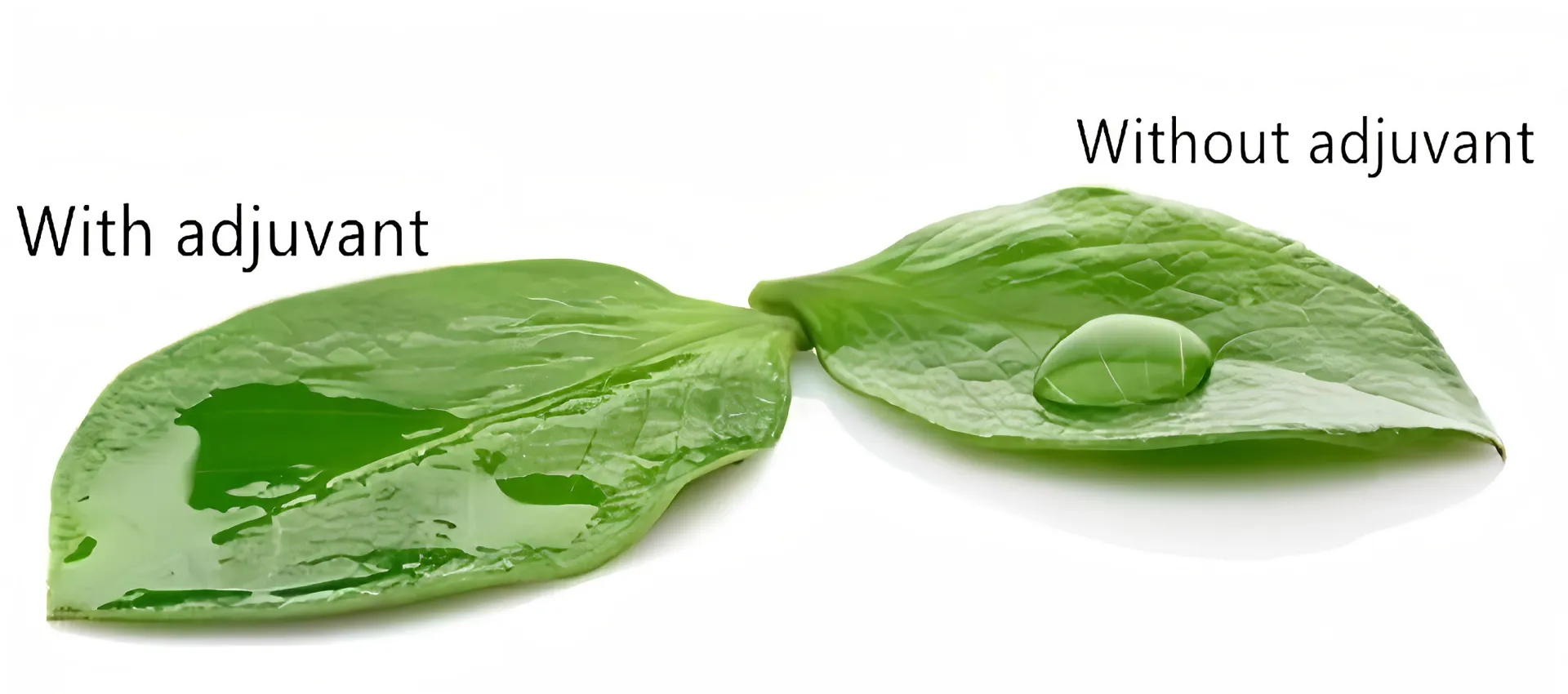
Silicone adjuvants demonstrate superior spreading capabilities, enabling spray droplets to cover up to 10 times more surface area compared to mineral oil formulations. This “super-spreader” effect results from their ability to reduce surface tension to levels below 25 mN/m, allowing droplets to spread rapidly across waxy leaf surfaces that typically resist water-based solutions.

Mineral oil adjuvants, while effective at improving coverage, cannot achieve the same ultra-low surface tension properties. Their spreading action relies more on oil-based penetration rather than rapid surface spreading.

2. Penetration and Absorption Efficiency

The molecular structure of silicone adjuvants facilitates enhanced penetration through plant cuticles and stomatal openings. Research shows that silicone-based formulations can significantly improve the uptake of active ingredients in herbicides, fungicides, and insecticides by up to 30-50% compared to mineral oil adjuvants.

Mineral oil adjuvants work through a different mechanism, primarily enhancing penetration by dissolving waxy cuticles rather than facilitating stomatal infiltration. This can be effective but may require higher application rates to achieve comparable results.

3. Rainfastness and Adhesion

Silicone adjuvants provide excellent rainfastness properties, with formulations designed to resist wash-off for extended periods. Their ability to form a protective film on leaf surfaces helps maintain pesticide efficacy even after rainfall events.

Mineral oil adjuvants offer good adhesion properties but may be more susceptible to wash-off under heavy rainfall conditions due to their oil-based nature.

4. Compatibility and Mixing Properties

Silicone adjuvants demonstrate broad compatibility with various pesticide formulations, including herbicides, insecticides, fungicides, and foliar fertilizers. Their non-ionic nature and low foaming characteristics make them easy to incorporate into tank mixes without causing compatibility issues.

Mineral oil adjuvants can sometimes cause emulsion stability problems when mixed with certain pesticide formulations, particularly those with high salt content or specific pH requirements.

Environmental and Economic Considerations

Environmental Impact

Silicone adjuvants offer significant environmental advantages. Many modern formulations are biodegradable and designed to minimize environmental persistence. Their high efficiency allows for reduced chemical application rates, contributing to lower environmental loading.

Mineral oil adjuvants, being petroleum-derived, raise concerns about environmental persistence and potential soil contamination. While modern formulations have improved, they still carry a higher environmental footprint compared to silicone alternatives.

Economic Efficiency

The superior performance of silicone adjuvants translates into tangible economic benefits. By improving pesticide efficacy and reducing application rates, farmers can achieve cost savings of 15-30% on chemical inputs while maintaining or improving crop protection results. The ability to reduce water usage in spray applications further enhances economic efficiency.

Mineral oil adjuvants typically offer lower upfront costs but may require higher application rates to achieve comparable performance, potentially offsetting initial savings.

Application Considerations and Best Practices

Temperature Sensitivity

Silicone adjuvants perform optimally across a wide temperature range but should be avoided when temperatures exceed 90°F (32°C) to prevent potential crop damage. Their rapid spreading action can sometimes lead to phytotoxicity under extreme heat conditions.

Mineral oil adjuvants generally have good temperature tolerance but may cause crop stress under high-temperature conditions due to their oil-based nature.

Mixing and Application

Proper tank-mixing sequence is crucial for both adjuvant types. For silicone adjuvants, following manufacturer recommendations for mixing order ensures optimal performance and compatibility. Their low foaming characteristics make them suitable for various application equipment, from backpack sprayers to large-scale aerial applications.

Mineral oil adjuvants require careful emulsification and may need additional agitation to maintain stability in the spray tank.

Industry Standards and Certifications

Silicone adjuvants from reputable manufacturers like Biyuan adhere to stringent quality standards. Key certifications include:

  • ISO 9001​ quality management systems
  • ISO 10993​ biocompatibility standards for agricultural applications
  • FDA 21 CFR 177.2600​ for food contact materials
  • USP Class VI​ for medical-grade purity requirements

These certifications ensure that silicone adjuvants meet the highest standards for safety, quality, and performance in agricultural applications.

Market Analysis and Growth Trends

The global market for silicone additives is experiencing robust growth, with projections indicating a compound annual growth rate (CAGR) of 6-7% from 2025 to 2033. This growth is driven by increasing demand for high-efficiency agricultural solutions, sustainability initiatives, and the need to maximize crop yields in challenging environmental conditions.

Asia-Pacific represents the largest and fastest-growing market, with China leading in both production and consumption of silicone adjuvants. The region’s rapid industrialization and expanding agricultural sector create significant opportunities for advanced adjuvant technologies.

Biyuan’s Advanced Silicone Adjuvant Solutions

As a leading manufacturer in the silicone adjuvant sector, Biyuan offers comprehensive solutions designed to meet the evolving needs of modern agriculture. Our product portfolio includes:

QS-302 Series: High-performance silicone surfactants with CAS 67674-67-3, specifically engineered for enhanced pesticide efficacy and foliar fertilizer applications. These formulations deliver exceptional spreading, wetting, and penetration properties while maintaining excellent rainfastness.

QS-3240 Super Spreader: Advanced polyether modified trisiloxane technology that achieves ultra-low surface tension for maximum leaf coverage. This product is particularly effective for hard-to-wet surfaces and waxy leaf crops.

Custom Formulation Services: Biyuan’s technical team works closely with agricultural professionals to develop tailored adjuvant solutions for specific crop protection challenges, soil conditions, and environmental factors.

Case Study: Real-World Performance

In field trials conducted across multiple crop types, Biyuan’s silicone adjuvants demonstrated significant performance improvements:

  • Herbicide Applications: 40% reduction in application rates while maintaining weed control efficacy
  • Fungicide Programs: 35% improvement in disease control compared to mineral oil adjuvants
  • Foliar Fertilizers: 50% increase in nutrient uptake efficiency
  • Water Usage: 25% reduction in spray volume requirements

These results highlight the tangible benefits that silicone adjuvants deliver in real-world agricultural operations.

Future Developments and Innovation

The silicone adjuvant industry continues to evolve, with research focusing on next-generation formulations that offer even greater efficiency and environmental sustainability. Key areas of innovation include:

  • Enhanced Biodegradability: Development of fully biodegradable silicone polymers that maintain high performance while minimizing environmental impact
  • Smart Delivery Systems: Formulations that respond to environmental triggers for targeted release of active ingredients
  • Multi-Functional Adjuvants: Products that combine spreading, penetration, and rainfastness properties with additional benefits such as UV protection or nutrient enhancement

Biyuan remains at the forefront of these innovations, investing in R&D to develop solutions that address the complex challenges facing modern agriculture.

Conclusion: Making the Right Choice

The comparison between silicone adjuvants and mineral oil adjuvants reveals clear advantages for silicone-based technologies across multiple performance metrics. While mineral oil adjuvants continue to have a place in certain applications, the superior spreading, penetration, and environmental profile of silicone adjuvants make them the preferred choice for modern, sustainable agriculture.

For agricultural professionals seeking to maximize crop protection efficiency while minimizing environmental impact and input costs, silicone adjuvants represent a strategic investment in farm productivity and sustainability. By partnering with experienced manufacturers like Biyuan, farmers can access advanced adjuvant solutions backed by technical expertise and proven performance.

Factory Products

Our most popular products loved by customers worldwide

SILICONE ADJUVANT FOR AGRICULTURE

SILICONE ADJUVANT FOR AGRICULTURE

In the era of precision agriculture, SILICONE ADJUVANT has redefined crop protection standards through its advanced surfactant technology. By leveraging organosilicon compounds, this innovative solution tackles fundamental challenges in pesticide application with unparalleled efficacy. The agent’s core strength lies in its ability to transform liq.

SILICONE ADJUVANT FOR DEFOAMER

SILICONE ADJUVANT FOR DEFOAMER

SILICONE DEFOAMER: REDEFINING INDUSTRIAL FOAM CONTROL In the demanding environments of chemical processing, food production, and bio-fermentation, foam presents a persistent challenge to operational efficiency and product quality. SILICONE DEFOAMER emerges as a critical solution, engineered with advanced organosilicone technology to deliver unparalleled.

SILICONE ADJUVANT FOR COATINGS AND INKS

SILICONE ADJUVANT FOR COATINGS AND INKS

Within the coatings and inks industry, achieving flawless surface aesthetics and superior functionality presents persistent challenges in formulation design and application. Silicone additives address these challenges through advanced molecular technology designed to precisely modulate surface tension and interfacial properties. Their core functionality st.

SILICONE ADJUVANT FOR PLASTIC AND RUBBER PROCESSING

SILICONE ADJUVANT FOR PLASTIC AND RUBBER PROCESSING

Silicone adjuvants are transforming plastic and rubber manufacturing through their exceptional interface modification capabilities. These specialized additives enable significant processing improvements, including up to 40% reduction in melt viscosity, enhanced filler dispersion, and elimination of surface defects—all while increasing extrusion efficiency .

Contact Us

We're here to help with any questions or inquiries you may have

Send us a message

Contact Information

Address

No. 116, Jiangdong Street, Yiwu City, Jinhua City, Zhejiang Province,China

Phone

+86 18807097967

Email

silicone1985@gmail.com

Follow Us